924S / 944 exhaust manifold: what to look for before you buy
Cast cracks, rusty flanges, and mismatched silencers: how to choose an exhaust manifold that fits Porsche 924S and 944 — and what stainless changes.
Contents
On a 924S or 944, the exhaust manifold is one of those parts you ignore until it fails: a ticking flange on cold start, a cracked runner after heat cycles, or a rusty joint that never quite seals again. Stock manifolds are cast iron. After forty years they still work on many cars, but cracks and warped flanges are common — and a used replacement is often as tired as the one you removed.
This guide covers what matters when you replace or upgrade the manifold on a naturally aspirated 924S / 944 (8-valve), how it interacts with the rest of the exhaust, and what to check for fitment before you buy.
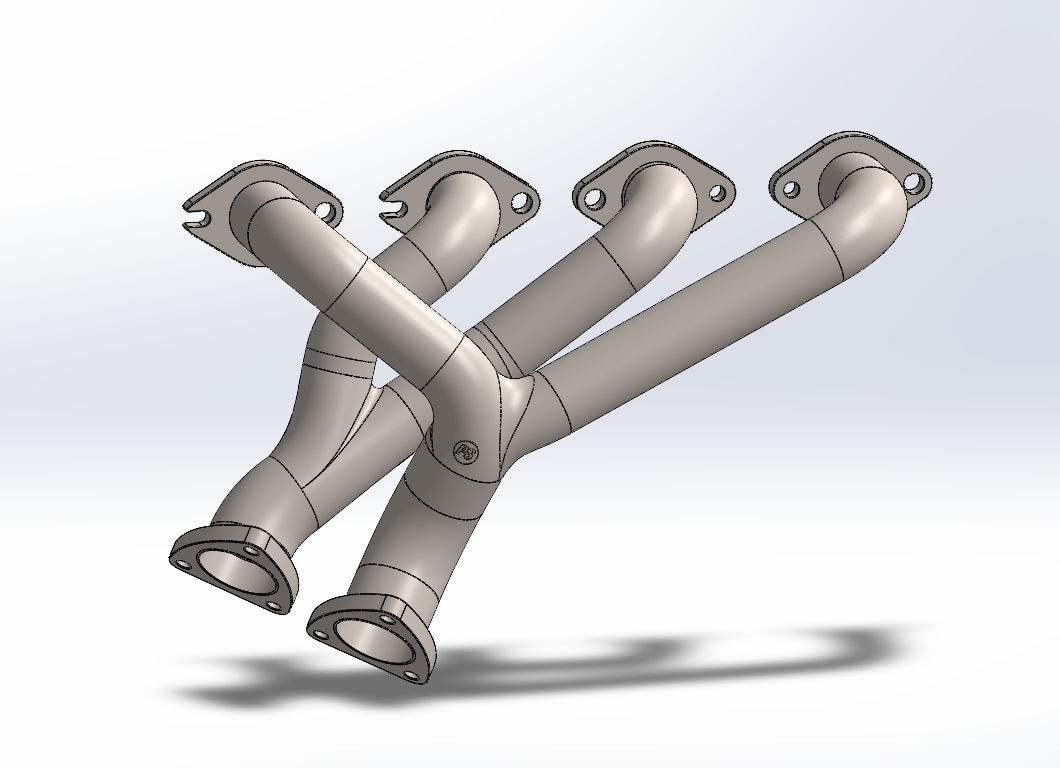
What the manifold does (and what it doesn't)
The manifold collects exhaust from each port and feeds the downpipe / primary silencer. It does not fix a clogged catalyst, a rotten silencer, or a leaking oxygen-sensor bung further down the system. If the car smells rich or fails an emissions test, diagnose the full exhaust and mixture first.
A healthy manifold should:
- Seal cleanly at the head (fresh gasket, even flange face)
- Hold torque on the studs without cracking the casting
- Match the flange pattern of the pipe or silencer you will bolt to next
Cast iron vs stainless
Cast iron (OEM-style) is what the cars left the factory with. Pros: original look, widely understood fitment. Cons: heavy, prone to cracks at runners and flanges after decades of heat cycling, and good used pieces are scarce.
Stainless is the usual upgrade path when the cast piece is gone. Pros: corrosion resistance, weldable if you need a repair later, often lighter. Cons: different expansion behaviour (use the right gasket and re-check torque after the first heat cycle), and quality varies wildly between makers.
Whatever you buy, prefer clear fitment wording — which models and engine variants — over vague “Porsche exhaust” marketing. Cross-references to OEM numbers (for example replaces OEM ref. 944 111 127 05) are useful for checking flanges; they are not a claim that the part is factory Porsche.
Silencer and system pairing
Replacing only the manifold when the primary silencer is rotten just moves the leak downstream. Before ordering:
- Inspect the head flange face and studs.
- Check the next joint (downpipe / silencer) for oval flanges and seized nuts.
- Confirm whether your car still has a catalyst and where the O2 sensor sits.
If you are also chasing a deeper note or freer flow, plan the whole system (manifold + mid + rear) so flange patterns match. Mixing random used pieces is how you end up with adapter plates and perpetual exhaust leaks.
Fitment checklist for 924S and 944
Before you click buy:
- Confirm 924S / 944 naturally aspirated (exclude turbo 951 unless the listing says so explicitly)
- Confirm 8-valve vs 16-valve if the seller distinguishes them
- Compare flange photos to your head and to the pipe you will reuse
- Ask whether gaskets, studs, or nuts are included
We build a stainless manifold sized for these cars and list fitment on the product page. Not affiliated with Porsche AG; model names are used only to describe compatibility.
Available in our shop Stainless exhaust manifold — fits Porsche 924S & 944 Shop now
Related reading
- 5 affordable modifications for Porsche 924S/944 — other reliability and drivability work we fit
- Questions about year or engine variant? Contact us with a photo of your flange before you order