Porsche 924S/944 air-oil separator: what it does and how to reseal it
The 924S/944 air-oil separator is a swirl tube with four seals. What it does, why old seals cause vacuum leaks, and how to rebuild it.
Contents
The air-oil separator, or AOS, sits on the side of the block on every 924S and 8-valve 944. It pulls oil out of the crankcase gases before they are burned. When the seals harden you get oil weeping down the block, an oily throttle body, and a vacuum leak that upsets the idle. The seals cost a few euros; a replacement separator now costs several hundred. Here is how the part works and how to reseal it.
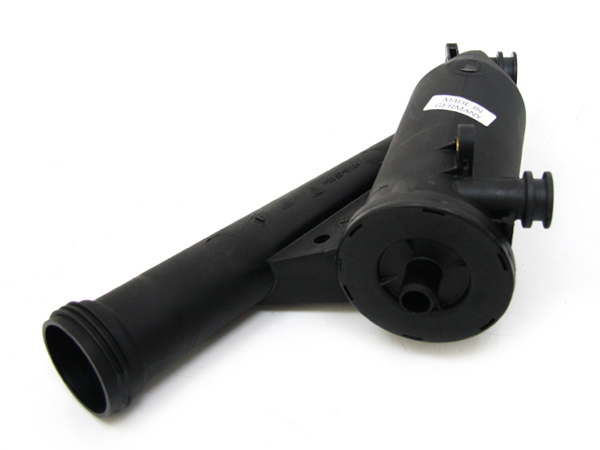
What the air-oil separator actually does
Every piston engine leaks a little combustion gas past the rings and into the crankcase. That blow-by has to go somewhere, and it carries a mist of engine oil with it. Porsche didn't want to vent that oily haze to the atmosphere, so the crankcase gases are routed back into the intake, through the throttle body, and burned with the rest of the mixture.
Burning raw oil mist is a bad idea, though. It coats the throttle body and intake with varnish, and whatever survives combustion ends up in the catalytic converter. So Porsche put a separator in the middle of the circuit to condense the oil out first: the oil drains back down into the block and the sump, and only the (mostly) clean gas carries on to the intake.
Simpler than people believe
There's a persistent idea that the AOS is some intricate device with baffles and filter media inside. Pull the cap off and you'll find nothing of the sort. It's a hollow plastic tube. No internal features at all.
The clever part is the inlet: it's offset from the centre rather than pointing straight in. Gases entering the tube swirl around the walls like water going down a drain, the oil droplets get flung against the plastic and condense there, and gravity takes them back down into the crankcase. A swirl tube, that's the whole trick.
Which is exactly why replacing the complete unit rarely makes sense. There's nothing inside to wear out. What fails is the rubber around it.
2 separator versions: order the right seals
Porsche revised the AOS early in 944 production, and the two versions take different seals where the separator plugs into the block:
- Early cars (first production, MY 1983): the top and bottom spigots are the same diameter, so the separator uses two identical 20 x 5 mm o-rings. The cap on these is smooth.
- Later cars, including every 924S: the bottom spigot is noticeably bigger than the top. These take a 20 x 5 mm o-ring on top (Porsche 999 701 613 40) and a 24 x 5 mm on the bottom (999 701 661 40). The cap gained ridges, which makes it much easier to grip and unscrew.
The changeover happened during early production rather than on a neat calendar date, so order by your model year — and if in doubt, measure the spigots before buying. Ten seconds with a caliper beats a second parts order.
One more trap: the AOS o-rings are orange, and if you've bought a full engine gasket kit they look almost identical to the rear seals for the balance shaft covers. Mix them up and neither joint will seal. Keep them labelled until they go on the car.
Why worn AOS seals cause real problems
The 924S and 944 measure intake air with a flap-type airflow meter, and the DME calculates fuel from that one reading. The whole system assumes that every bit of air entering the engine has passed through the meter. A leaking AOS cap o-ring lets unmetered air into the intake, a classic vacuum leak, and the engine runs lean: rough or hunting idle, hesitation, the usual misery that gets blamed on everything except a two-euro o-ring.
As they harden, the body o-rings give out too: oil seeps out where the separator meets the block and runs down the side of the engine. More than one 944 has had its sump gasket or front seals condemned for a leak that was actually coming from the AOS above.
And when the separator can't do its job properly, more oil mist reaches the throttle body and intake, gumming them up, before heading on to the catalytic converter. None of that is good for how the engine runs or breathes.
A new separator for the 8-valve engine costs several hundred euros — when you can find one. The four seals cost just a few euros. This is one of the easiest value-for-money jobs on these cars.
The four places an AOS can leak
Rebuilding the AOS means replacing four seals:
- The cap o-ring. The most obvious one, right under the screw-on cap. This is the seal that creates a vacuum leak for the intake when it fails.
- The upper body o-ring where the separator enters the block.
- The lower body o-ring, just below it (the larger 24 x 5 mm on later cars).
- The hidden one: the "spaghetti seal." Under the top cover there's a thin ring seal most people never know exists. The cover is held by six small barbs and a locating tab. Work around it with a couple of small screwdrivers to release the barbs, pop the cover off, swap the seal, and clip it back on. Fiddly, but entirely doable.
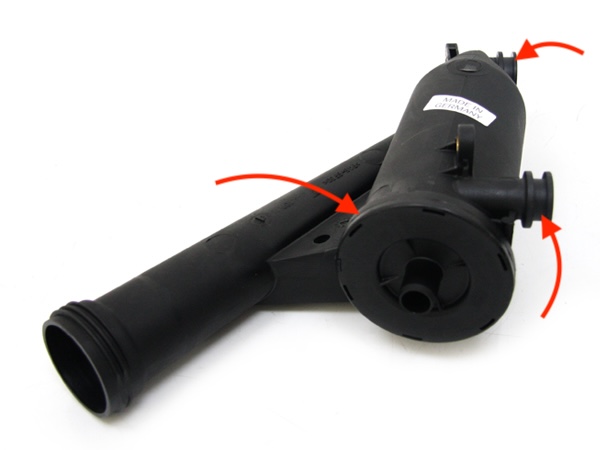
Do all four while the part is off. Replacing three and leaving the spaghetti seal is how the job gets done twice.
Installation tips
- Access: on a naturally aspirated car the intake manifold has to come off to reach the separator. While it's off, it's the ideal time to inspect the intake gaskets and vacuum hoses — old crumbly hoses cause the same lean-running symptoms you're trying to cure.
- Lubricate the o-rings with clean engine oil before pushing the separator into the block. They slide in without pinching and seal better for longer.
- Check the bores for mould flashing. The plastic spigots sometimes carry a rough seam from manufacture that can slice into a fresh o-ring. A pass with a razor blade to smooth the bore is cheap insurance.
- Don't over-torque the fasteners. The mounting bolts bottom out on metal sleeves inside the plastic, so cranking them harder gains nothing and risks cracking it. Snug is enough.
Going further
While the intake is off and you are chasing oil leaks, check the sump as well — our guide to replacing the oil sump gasket without removing the engine covers the tape method that makes it a one-person job.
If you would rather hand the work to a workshop, the directory of Porsche 924/944 specialists lists workshops by country.
For other parts, see the shop or contact us with a diagnosis question before you order.