Vapor blasting explained: how it works and why we use it
What vapor blasting is, how it cleans aluminium and magnesium parts without removing metal, how it compares to sandblasting and other methods, and how to get your 924S/944 parts done.
Contents
Pull an aluminium part off a 40-year-old 924S or 944 and it rarely looks good. Four decades of heat, oil and oxidation leave a dull, grey surface that scrubbing does not restore. Vapor blasting cleans those parts without grinding away the metal underneath.
Here is what vapor blasting is, how it works, how it compares to other cleaning methods, and why we offer it for 924S and 944 parts.
What is vapor blasting?
Vapor blasting (also called wet blasting or vapour blasting) is a cleaning process that uses a mix of water and very fine abrasive media, usually tiny glass beads, fired at the part under pressure.
The key word is water. Dry blasting throws abrasive straight at the metal. Vapor blasting wraps that abrasive in a film of water first. The water acts as a cushion: it carries the media into every corner and pore, lifts out oxidation and grime, then flushes it away, all without the harsh, metal-cutting impact of dry blasting.
The result is a clean, even, satin finish that looks close to how the part left the factory, with the original shape and dimensions untouched.
Gentle by design
The big advantage of vapor blasting is what it does not do: it does not eat into the metal.
Dry blasting uses hard, angular grit that strikes the surface directly. It cleans fast, but every hit chips away a little metal, leaving a rough, peaky surface profile. On precision parts that can change dimensions and create stress points.
Vapor blasting uses rounded glass beads cushioned by water. The beads roll and skim across the surface rather than digging in. They lift contamination and leave a smooth, uniform satin finish, while the part keeps its original size and shape.
Vapor blasting vs other methods
Vapor blasting is not the only way to clean a tired part. Here is how it stacks up against the common alternatives.
| Method | How it works | Pros | Cons |
|---|---|---|---|
| Vapor blasting | Water + fine glass media under pressure | Deep clean into corners; smooth satin finish; no metal removed; no dust; gentle on alloy and magnesium | Needs specialist equipment; parts must be dried and protected after to avoid flash rust on ferrous metals |
| Dry sandblasting | Dry angular grit fired at the surface | Fast; cheap; strips heavy rust and paint | Removes metal; rough finish; grit lodges in threads and oilways; can warp thin castings; lots of dust |
| Soda blasting | Sodium bicarbonate fired dry | Very gentle; will not remove metal; good on soft surfaces | Weak on heavy oxidation; soda residue must be neutralised; finish is matte, not satin |
| Chemical dipping | Part soaked in a chemical bath | Good for paint and grease | Aggressive chemicals; can attack alloy; trapped chemical in cavities; disposal issues |
| Ultrasonic cleaning | Vibration in a heated solution | Excellent for oily, greasy parts and fine passages | Does not remove oxidation or restore finish |
| Hand polishing | Abrasives and elbow grease | Full control; high shine possible | Very slow; cannot reach recesses; uneven on complex castings; removes metal if overdone |
For aluminium and magnesium parts that you want clean and original-looking, not stripped or reshaped, vapor blasting is usually the best balance of the lot.
Before & after
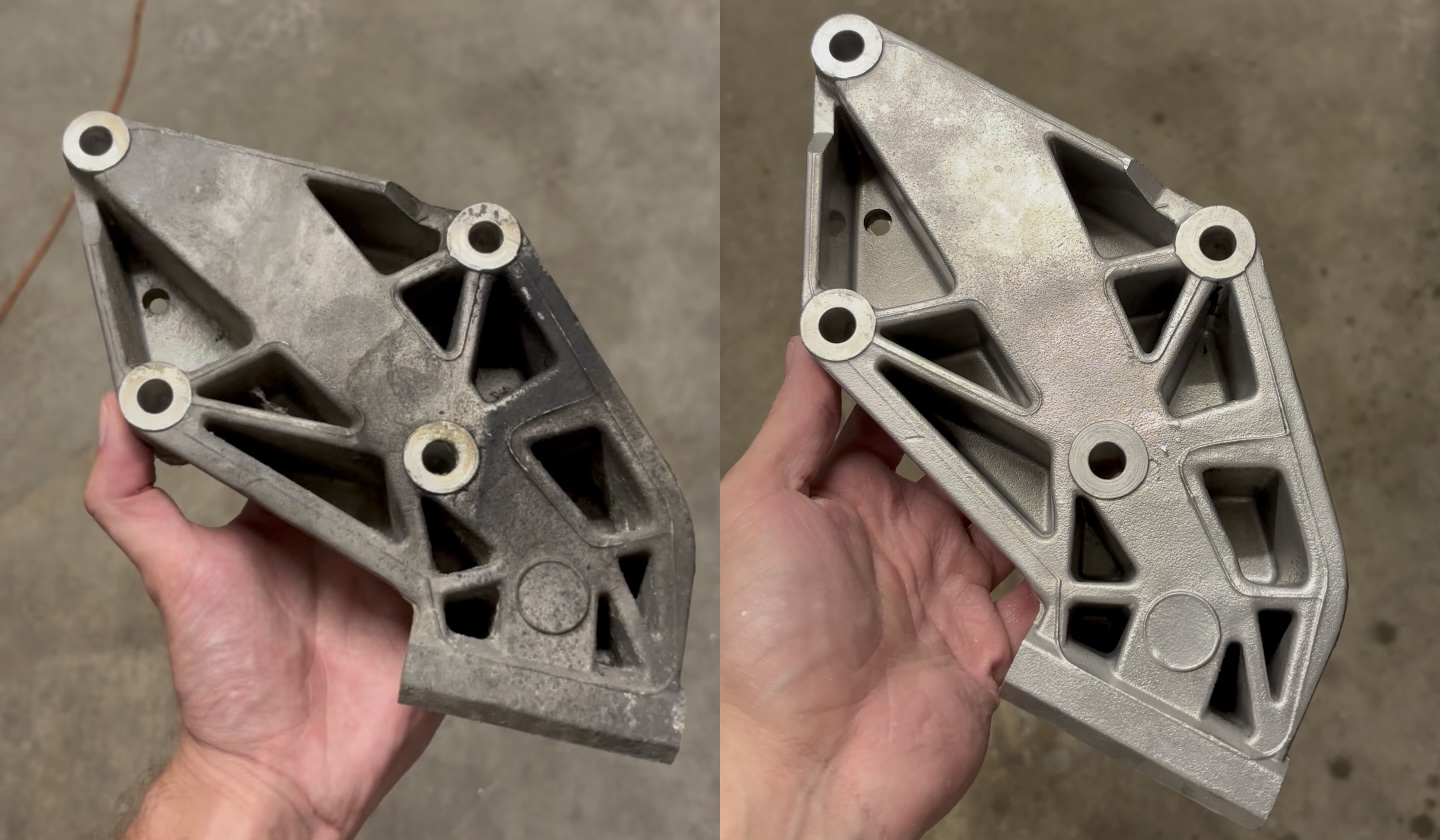
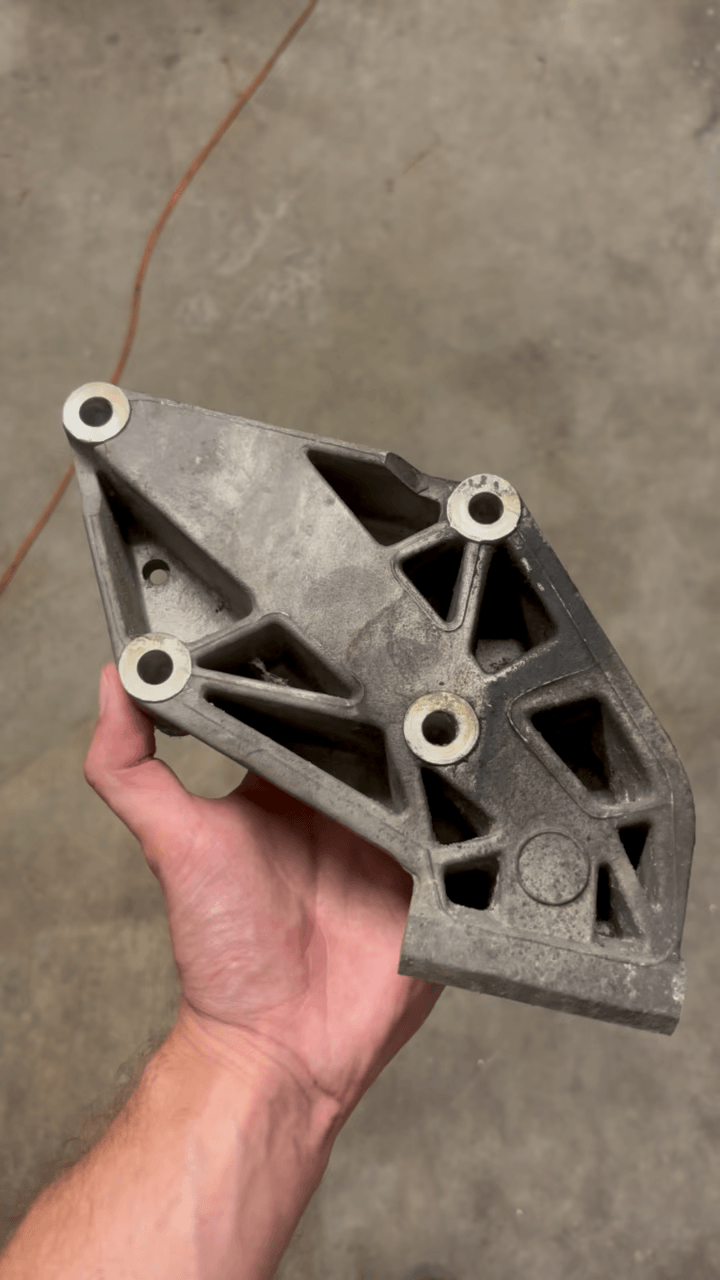
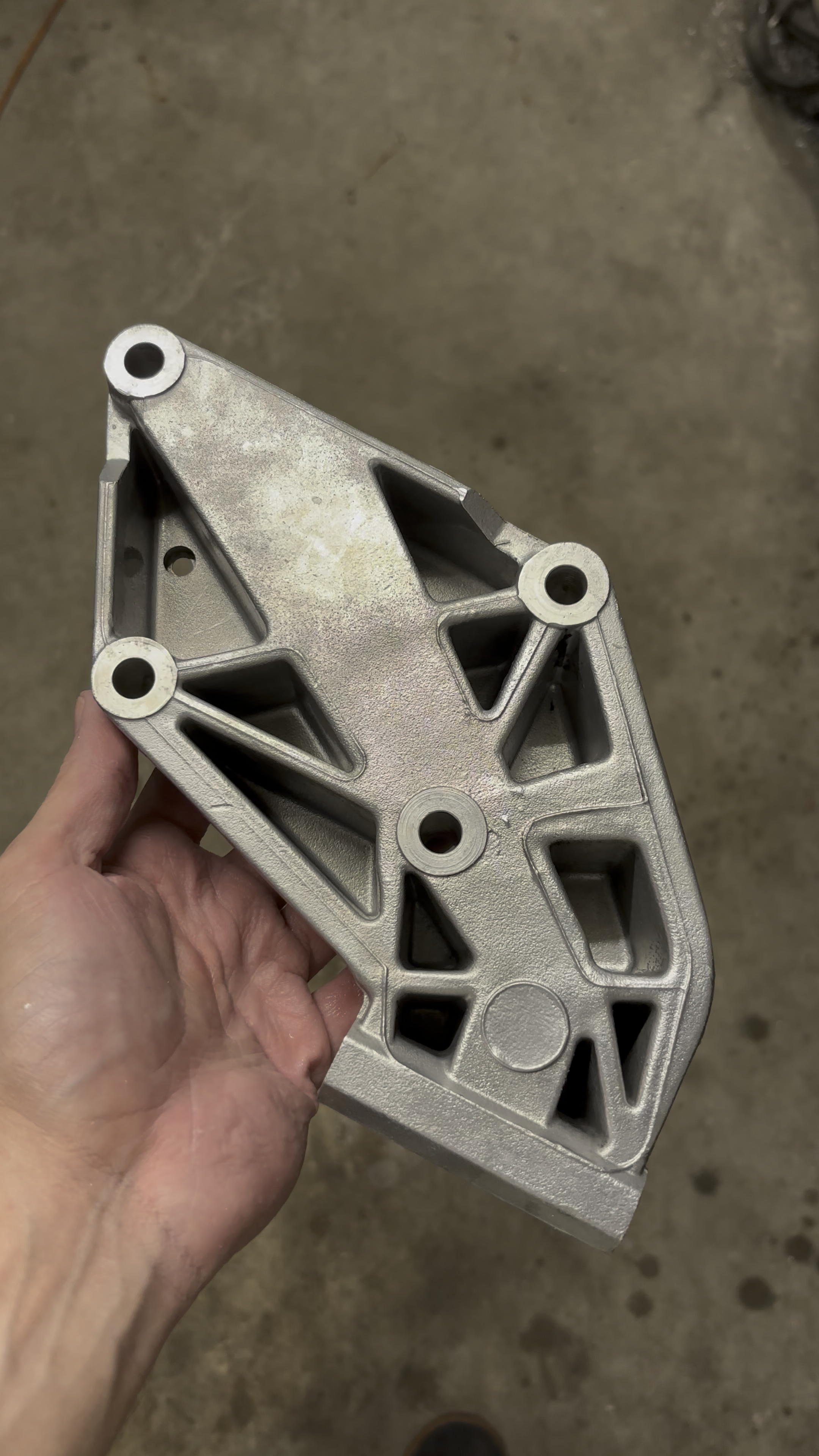
The difference is visible. Below: an alternator bracket from a 944, before and after vapor blasting.
Now available at Paddock Service
We offer vapor blasting for 924S and 944 parts. Send brackets, covers, calipers or housings and we will return them with a clean satin finish, without removing metal or changing the fit.
It pairs with jobs where parts already come off the car — for example while replacing the oil sump gasket, the sump itself can be blasted before it goes back on.
Contact us with a list of parts for a quote.
Vapor blasting 924S / 944 parts: request a quote Get a quote